What It Means to Make Your English Sound More Natural?
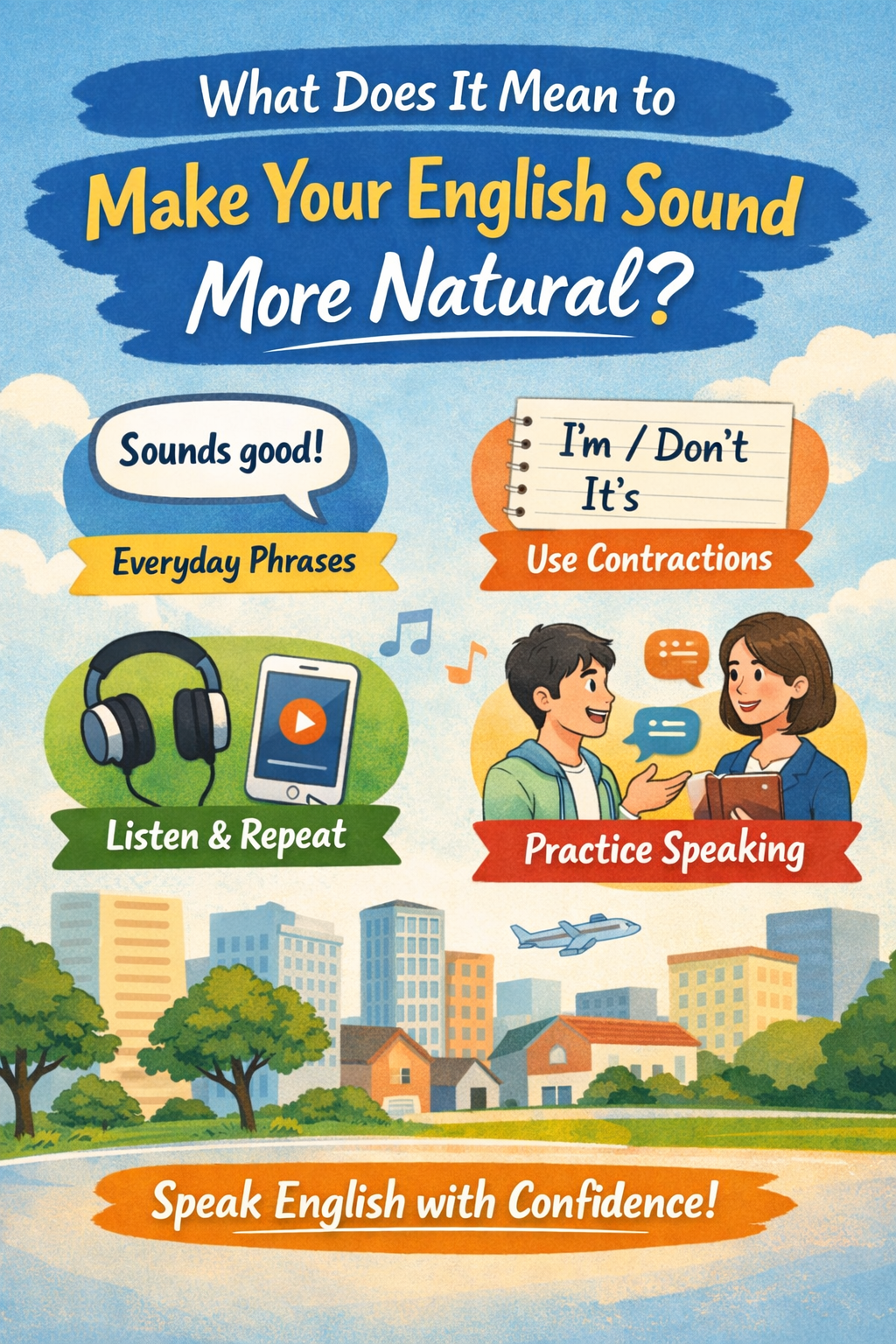
A friendly illustrated banner for an English-learning blog titled “What Does It Mean to Make Your English Sound More Natural?”. The image highlights four key learning tips: Everyday Phrases, Use Contractions, Listen & Repeat, and Practice Speaking, each represented with simple icons and illustrations of learners in conversation. The background shows a bright, welcoming city scene, creating an encouraging and approachable atmosphere for English learners.
What Does It Mean to Make Your English Sound More Natural?
When people study English, they often focus on grammar rules and vocabulary lists. Those things are important — but they’re only part of the picture.
At A-1 English School, I work with students one-on-one, and one thing I hear very often is:
“I can make sentences, but they don’t sound natural.”
So what does natural English actually mean? And how can you practice it? Let’s take a closer look.
What Is “Natural English”?
Natural English is the kind of English people use in real conversations. It isn’t perfect, and it isn’t formal all the time. Instead, it’s comfortable, clear, and easy to understand.
Native speakers don’t usually speak the way textbooks are written. They shorten sentences, use common expressions, and speak with a natural rhythm. Learning this style of English helps you communicate more smoothly and confidently.
1. Use Simple, Everyday Expressions
In real conversations, shorter and simpler phrases are usually better.
For example:
Instead of:
“I would like to ask you a question.”
Try: “Can I ask you something?”Instead of:
“My schedule is busy today.”
Try: “I’m pretty busy today.”
These small changes make your English sound more natural and relaxed.
Example Dialogue
Textbook English
A: Excuse me. I would like to ask you a question.
B: Yes, what would you like to ask?
More Natural English
A: Hey, can I ask you something?
B: Sure, what’s up?
2. Don’t Be Afraid of Contractions
Contractions are a big part of spoken English. Native speakers use them constantly.
Examples:
I am → I’m
You are → You’re
Do not → Don’t
It is → It’s
Using contractions helps your English sound less stiff and more like real conversation.
Example Dialogue
Without contractions (unnatural in speech):
A: I am not sure if it is ready.
B: Do not worry about it.
With contractions (natural):
A: I’m not sure if it’s ready.
B: Don’t worry about it.
3. Listen to How English Is Actually Spoken
One of the best ways to learn natural English is simply to listen.
Pay attention to:
How sentences are shortened
Which words are stressed
Common phrases people repeat
Movies, TV shows, podcasts, and conversations in class are all great resources. When you hear a useful phrase, try repeating it out loud.
4. Practice Speaking in Real Situations
Natural English comes from using English, not just studying it.
I always encourage my students to:
Try new expressions in conversation
Answer questions naturally instead of translating word-by-word
Focus on communication, not perfection
Mistakes are normal — and necessary — when learning a language.
Example: Student Speaking
Less natural:
Yesterday I went to the supermarket and purchased food.
More natural:
Yesterday I went to the supermarket and bought some food.
Simple words are often the best choice.
Practice Tip
Try this simple exercise:
Read the “natural” examples out loud.
Record yourself saying them.
Listen again and focus on rhythm, not perfection.
Doing this regularly will help your English sound more confident and natural over time.
Final Thoughts
Making your English sound natural doesn’t happen overnight. But with regular listening, practice, and real conversation, it becomes much easier.
At A-1 English School, my goal is to help students speak English that feels real, useful, and confident — not just correct on paper.
📣 Call to Action
If you want to practice this kind of natural English in real conversations, I’d be happy to help.
At A-1 English School, I offer private one-on-one lessons focused on speaking naturally and confidently — not just textbook English.
👉 Book your lesson here and start speaking English more naturally:
https://www.a-1-english-school.com/book-your-lesson